Best Industrial Borescope Manufacturer: How to Choose a Supplier That Lasts | JEET
A maintenance manager at a European energy utility buys a $28,000 articulating videoscope from a Tier-1 Japanese brand. Eighteen months later, the articulation cable frays — the replacement probe has a 14-week lead time and costs $4,200. Meanwhile, a procurement team at a Southeast Asian automotive plant orders a $6,500 video borescope from a Chinese manufacturer they found on Alibaba. The image sensor fails after six months, the seller has disappeared, and there is no warranty, no spare parts, and no calibration service. Both scenarios are real. Both stem from the same mistake: treating the borescope manufacturer selection as a price comparison rather than a long-term partnership evaluation.
This guide is for procurement teams, NDT managers, and engineering directors who are evaluating industrial borescope suppliers for the first time — or replacing a supplier that failed them. We break down the three-tier global market landscape, calculate the true total cost of ownership (not just the sticker price), and provide an 8-step supplier evaluation framework you can run before signing a purchase order. Whether you are considering a premium Japanese brand, a mid-market Western option, or a borescope manufacturer from China, the criteria here apply equally. If you need a comprehensive guide to borescope types and specs, this article complements that resource by focusing on the supplier decision — not the product specification.
1. Why Your Choice of Manufacturer Matters More Than the Product
An industrial borescope is not a consumable — it is a 5-to-10-year capital asset. The manufacturer you choose determines not just the initial product quality, but the entire lifecycle: probe availability, software updates, calibration support, repair turnaround, and whether your inspection data remains compatible with future systems. A well-chosen supplier partnership reduces total operating cost by 30–40% over the equipment's service life. A poorly chosen one — whether premium or budget — inflates it.
5–10 yr
typical service life of an industrial video borescope — the manufacturer relationship outlasts the procurement cycle by years
30–60%
price advantage of Chinese OEMs versus Japanese and German incumbents — but the gap narrows when TCO and support infrastructure are included
62%
of industrial inspection camera downtime is caused by supplier capability gaps — not operator error or product defects — per 2026 industry survey data
The industrial borescope market is not homogeneous. At the top, Japanese and German brands (Olympus/Evident, Waygate Technologies/Baker Hughes, Karl Storz) command $15,000–$80,000 per system with established global service networks. In the middle, Western mid-market brands (Fluke, Testo) and established Chinese manufacturers compete at $3,000–$15,000. At the bottom, hundreds of unbranded trading companies sell rebranded units for $500–$2,000 with no R&D, no spare parts inventory, and no after-sales infrastructure. The best industrial borescope for your application is not necessarily the most expensive — it is the one backed by a manufacturer that will still exist, still stock your probe model, and still answer the phone in five years.
The procurement principle: You are not buying a borescope — you are buying a 5-to-10-year inspection capability. The manufacturer's R&D depth, spare parts strategy, calibration infrastructure, and technical support determine whether that capability stays available. Evaluate the supplier first; the product second.
2. The 3-Tier Global Borescope Market Landscape
Understanding the market structure is the first step in supplier evaluation. Every industrial borescope manufacturer falls into one of three tiers — each with distinct strengths, weaknesses, and ideal customer profiles. There is no "best tier" universally; there is only the best tier for your budget, application criticality, and support requirements.
Over 80% of the world's industrial borescopes are manufactured in China — primarily in Shenzhen and Dongguan. This includes OEM production for several Tier-1 Western brands. The key distinction within the Chinese market is between manufacturers with own R&D and production lines (Tier 2) and trading companies that rebrand others' products (Tier 3). The price may look similar on a listing page; the after-sales experience will not. Section 5 covers how to tell them apart.
3. Total Cost of Ownership: Beyond the Sticker Price
The purchase price of a video borescope is typically 40–60% of its total cost of ownership over a 7-year service life. Probe replacements, software licenses, calibration contracts, and repair services compose the rest — and these vary dramatically by manufacturer tier. A $6,000 system from a manufacturer with no spare parts inventory can cost more over five years than a $12,000 system from a manufacturer that stocks replacement probes at $800 each.
| Cost Component | Tier 1 (Premium) | Tier 2 (Mid-Market) | Tier 3 (Budget) |
|---|---|---|---|
| Base system | $15,000–$80,000 | $3,000–$15,000 | $100–$2,000 |
| Replacement probe | $2,000–$8,000 | $500–$2,500 | Not available — buy new unit |
| Probe lead time | 8–16 weeks (often ex-Japan) | 1–4 weeks (ex-factory stock) | N/A |
| Software license (measurement/reporting) | $1,500–$6,000/seat + 10–15%/yr maintenance | Often included; $200–$800/yr updates | None or freeware |
| Annual calibration/service contract | $800–$3,000/yr (certified labs) | $200–$800/yr or self-calibration module | Not available |
| Repair turnaround (warranty) | 2–6 weeks (regional service center) | 1–2 weeks (factory direct) or loaner unit | Not available — unit is disposable |
| Expected service life | 8–12 years (with maintenance) | 5–8 years (with probe swaps) | 6–18 months (high failure rate) |
| 7-year TCO (estimated) | $25,000–$110,000 | $6,000–$25,000 | $2,000–$8,000 (replace 4–6×) |
The TCO insight: A Tier-2 manufacturer with spare probes in stock, included software, and factory-direct repair can deliver a 7-year TCO that is 60–75% lower than a Tier-1 system for equivalent inspection capability. The Tier-3 "bargain" is the most expensive option per year of reliable service — you are buying disposable equipment at a non-disposable price point.
4. The 8-Step Supplier Evaluation Framework
Whether you are evaluating three suppliers or thirty, the same eight checkpoints apply. Run them in order — each step eliminates candidates before you invest time in the next. By Step 5, you should be down to 2–3 serious contenders.
Verify Manufacturing Entity — Not Trading Company
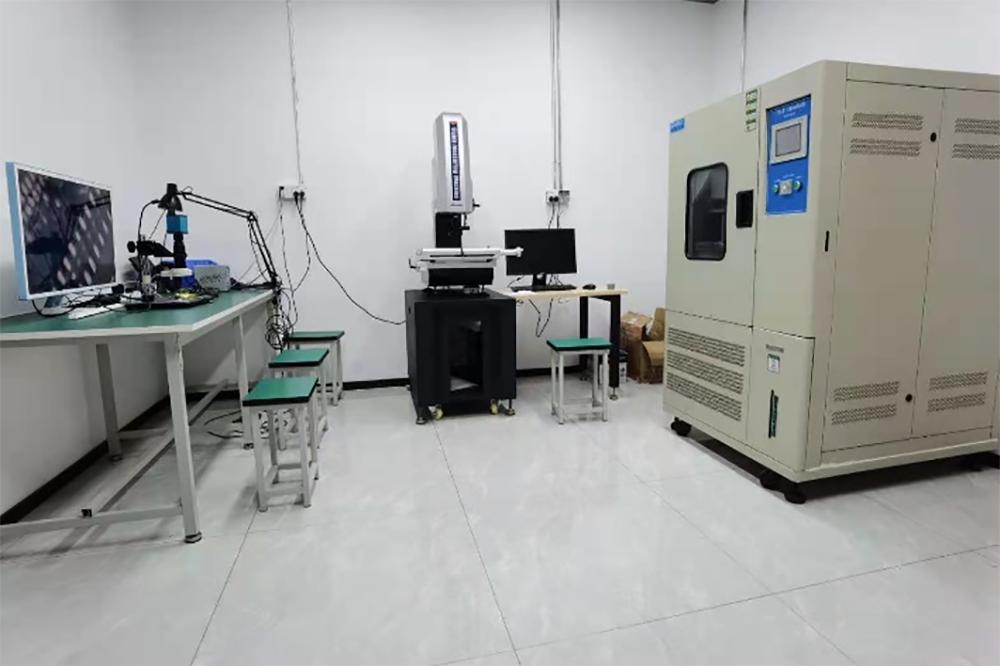
Request the manufacturer's business license (营业执照), factory address, and production floor photos/video. A trading company will have a registered address in an office building; a manufacturer will have a factory in an industrial zone. Ask for a live video factory tour — if they cannot show you the assembly line, calibration lab, and probe production area in real time, they are not the manufacturer. This single step eliminates 50% of Alibaba-listed "manufacturers."
Check Certifications & Test Reports
Minimum: ISO 9001 quality management, CE (EU market), FCC (US market). For hazardous environments: ATEX or IECEx. For aerospace: AS9100 or evidence of FAA/EASA acceptance. For submersion: IP67/IP68 test report from a recognized lab (not self-declared). Ask for the actual certificate PDFs — not a claim on a website. Verify the certificate is current and matches the manufacturer's legal name. Section 6 provides a full compliance matrix.
Assess R&D Depth & Patent Portfolio
A manufacturer with in-house R&D can customize probe diameters, software interfaces, and firmware. A trading company cannot — they can only request changes from their undisclosed factory, adding lead time and miscommunication risk. Ask: Do you design your own optics and image processing algorithms? How many R&D engineers do you employ? Can you show me patent certificates or software copyright registrations? Request a roadmap discussion — if their technical team can discuss CMOS sensor selection, articulation mechanism design, and NPU integration, you are talking to engineers, not salespeople.
Request Customer References in Your Industry
Ask for 2–3 reference clients in your specific industry (automotive, aerospace, petrochemical, energy) and your geographic region. Contact them directly. Key questions: How long have you used this supplier? Have you needed probe replacements — what was the lead time? Have you needed repairs — what was the turnaround? Would you buy from them again? A manufacturer that cannot provide references is either new (risky) or has unsatisfied customers (riskier).
Arrange Sample Testing — 72-Hour Minimum
Never place a bulk order without testing a sample unit in your actual inspection environment. Request a demo unit (or purchase a single unit with a return option). Run a 72-hour continuous operation test under your field conditions: temperature, humidity, vibration, chemical exposure. Test the three things that fail first: articulation mechanism fatigue, LED illumination degradation, and probe insertion tube wear. Compare image quality against your current equipment side-by-side. Section 8 provides a full testing protocol.
Evaluate After-Sales Infrastructure
Confirm in writing: warranty period (minimum 12 months; 24 is better), warranty coverage (does it include probe damage from normal use?), repair turnaround time, loaner unit availability during repairs, spare parts inventory for your specific probe model, and technical support response time (target: under 24 hours). Ask: If my probe fails during a critical inspection shutdown, what is your fastest support path? The answer reveals whether they have a service infrastructure or just a sales team.
Confirm Customization & ODM/ODM Capability
If you need custom probe lengths, specialized diameters, branded software interfaces, or language localization, confirm the manufacturer's capability and lead time for each. A real manufacturer will quote customization turnaround in days to weeks; a trading company will quote weeks to months (because they must relay to an undisclosed factory). Request a customization case study — proof they have done it before, not a promise that they can.
Negotiate Total Package — Not Just Unit Price
Use the TCO data from Section 3 as your negotiation lever. A manufacturer may not discount the base unit, but they may include: spare probe at cost, extended warranty to 24 months, free software updates for 3 years, free calibration for 2 years, or priority repair service. These bundled benefits often reduce 5-year TCO by 15–25% — far more valuable than a 5% unit price discount. Negotiate the relationship, not the line item.
5. "China Manufacturer" — Red Flags vs Green Flags
Over 80% of the world's industrial borescopes are manufactured in Guangdong, China — including OEM units for several Western brands. The challenge is not finding a Chinese manufacturer; it is distinguishing a real manufacturer from a trading company masquerading as one. The comparison below covers the signals that separate a reliable long-term partner from a listing-page mirage.
The single most reliable test: ask to speak with a technical engineer, not the salesperson who responded to your inquiry. A manufacturer with in-house R&D will connect you within hours. A trading company will deflect, promise to "check with the factory," and return with a scripted answer. Engineers answer questions differently than salespeople — they qualify, they ask about your application, and they occasionally tell you their product is not the best fit for your use case. That honesty is the strongest green flag of all.
6. Certifications & Compliance Checklist by Market
Certifications are not optional checkboxes — they are your legal and operational safety net. The required certifications depend on your industry, your geographic market, and the environment where the equipment will operate. Use the matrix below to build your compliance requirements before contacting suppliers.
| Certification | Scope | Required For | Verification |
|---|---|---|---|
| ISO 9001 | Quality management system | All industrial suppliers — baseline credibility | Certificate PDF + verify issuing body (TUV, SGS, BSI) |
| CE | EU product safety compliance | Any equipment sold or used in the EU/EEA | Declaration of Conformity + technical file |
| FCC | US electromagnetic compatibility | Any equipment sold or used in the United States | FCC ID lookup on fcc.gov |
| IP67 / IP68 | Dust-tight + waterproof (immersion) | Any probe used in wet, oily, or submerged environments | Third-party test report (not self-declared) |
| ATEX / IECEx | Explosive atmosphere equipment | Oil & gas, chemical, mining — Zone 1/Zone 2 classified areas | ATEX certificate from notified body (e.g., TUV, DEKRA) |
| AS9100 | Aerospace quality management | Suppliers to aerospace OEMs and Tier-1 MROs | Certificate + OEM approval letter (e.g., GE, Rolls-Royce) |
| ASTM E2900 | Standard practice for borescope examination | Compliance-driven NDT programs (pressure vessels, pipelines) | Manufacturer's inspection procedure references the standard |
| RoHS / REACH | Restriction of hazardous substances | EU market — electronic equipment compliance | RoHS declaration + REACH SVHC statement |
Compliance gap warning: If you operate in a regulated industry (aerospace, oil & gas, nuclear, pressure vessels) and your borescope lacks the required certifications, your inspection reports may not be accepted by auditors, insurers, or regulators — regardless of image quality. A $15,000 certified system that produces compliant documentation is cheaper than a $5,000 uncertified system that produces rejected reports. Verify certifications before purchase, not after an audit fails.
7. Customization & OEM/ODM Capabilities
Industrial inspection requirements are rarely identical across organizations. A wind turbine gearbox inspection needs a 10-meter probe; a fuel injector check needs a 0.5mm fiberscope; a petrochemical tank survey needs an ATEX-certified housing. The ability to customize — and the speed at which a manufacturer can deliver custom configurations — is a direct indicator of their manufacturing depth.
The fastest way to test customization capability: request a non-standard probe diameter (one that does not appear in their standard catalog). A manufacturer will quote a lead time and price within 48 hours. A trading company will say "let me check with the factory" and return days later with either a refusal or a price that suggests they found a different factory.
For multi-site deployments, OEM/ODM capability is especially valuable. A manufacturer that can deliver 50 units with identical firmware, consistent probe specifications, and a custom training package will save your organization months of onboarding time compared to buying standardized units from a catalog and adapting workflows around them. If you are comparing inspection camera types for a fleet deployment, involve the manufacturer's engineering team early in the selection process.
8. Pre-Purchase Checklist & Sample Testing Protocol
Before you issue a purchase order, run through this checklist. It consolidates every evaluation criterion from the previous sections into an actionable sequence. Print it, share it with your procurement team, and do not skip steps — even if the supplier seems perfect on paper.
Supplier Pre-Purchase Checklist
☐ Factory address verified (industrial zone, not office)
☐ Live factory video tour completed
☐ ISO 9001 certificate verified (name match)
☐ CE/FCC certificates verified (if applicable)
☐ ATEX/IECEx (if hazardous environment)
☐ IP67/IP68 test report from recognized lab
☐ R&D team consulted (engineer, not salesperson)
☐ Patent/software copyright evidence provided
☐ 2–3 industry references contacted and verified
☐ Sample unit tested for 72+ hours in field conditions
☐ Written warranty policy received (period + coverage)
☐ Repair turnaround confirmed in writing
☐ Spare probe availability and lead time confirmed
☐ Software license terms documented
☐ Calibration support path confirmed
☐ Customization capability tested (non-standard request)
☐ Company domain email (not Gmail/Hotmail)
☐ Payment terms negotiated (trade assurance or LC)
☐ TCO calculated over 5–7 year horizon
☐ Total package negotiated (not just unit price)
72-Hour Sample Testing Protocol
If the sample passes all four phases, the manufacturer has demonstrated both product quality and the fitness for your specific application. If it fails at any phase, return the unit and move to the next candidate — the cost of return shipping is trivial compared to the cost of deploying equipment that fails in service.
9. Why JEET — Our Positioning
We do not claim to be the best industrial borescope manufacturer for every application — no single manufacturer is. What we do claim is a specific, defensible position in the market: a Tier-2 Chinese manufacturer with in-house R&D, manufacturing depth, and a product line that covers the inspection needs of 80% of industrial NDT programs at 30–50% of Tier-1 pricing. Here is what that means in practice.
Product Line Overview
Video Borescope Series: Interchangeable probes (1.6–8.0 mm), 360° electric articulation, 1080p HD, tungsten braid IP67. For aerospace, automotive, pressure vessel NDT. Full guide →
AI-Powered Series (JMS): NPU 6 TOPS edge AI, 11 defect types, blade auto-counting, MDI reports. For facilities scaling inspection throughput. Full guide →
Push Camera Series: Semi-rigid rod, IP68 head, self-leveling, 512 Hz sonde. For heat exchanger tubes, drain lines, long pipe runs.
Custom Configurations: Non-standard probe diameters, OEM/ODM branding, language localization, industry-specific report templates. Lead time: 5–15 working days.
Request a Sample Unit or Factory Tour
Tell us your inspection application, access diameter, and compliance requirements. We will recommend a configuration, provide a TCO comparison, and arrange a sample unit for your 72-hour field test. No obligation — if we are not the right fit, we will tell you.